
The Ruins and the Metal Forest
The InvincibleThis flow follows the crew’s changing interpretation of the geometric ruins as a failed sedentary branch of machine evolution.
increasing Bearing strength in each event
 decreasing
Bearing strength in each eventdecreasingRuins as City
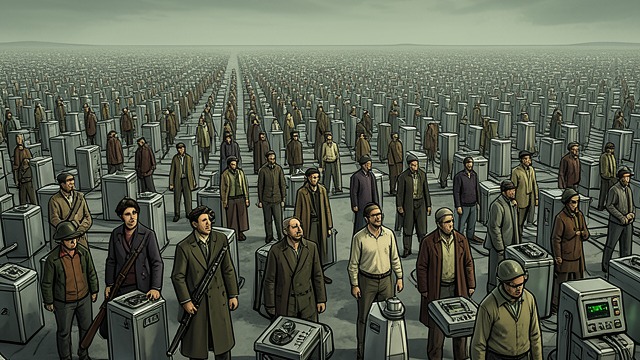
Ruins as City
Human Projection
The geometric formations are initially called a city because their scale and regularity resemble artificial settlement.
Disorientation
Closer inspection reveals no doors, rooms, or spaces designed for biological occupants. The structures are dense, open, and internally continuous.
The word city persists as a convenient label while its meaning steadily collapses.
Ruins as Machinery

Ruins as Machinery
Structural Evidence
The formations consist of rods, plates, honeycombs, and repeating metallic patterns. They resemble inactive machinery more than abandoned architecture.
No Interior Life
Sensors detect no current, radiation, or biological presence. The ruins are not shelters awaiting discovery but remains whose purpose has been erased.
Their emptiness makes the landscape more unsettling than a conventional dead city.
Sedentary Evolution
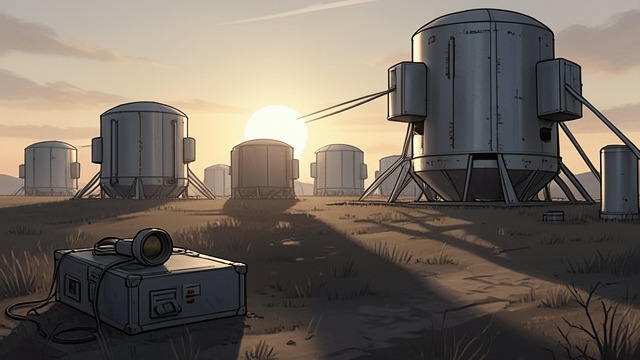
Sedentary Evolution
A Failed Branch
Lauda identifies the ruins as sedentary mechanisms that once absorbed solar energy and reproduced in place.
Extinction by Environment
A cooling sun may have deprived these larger forms of sufficient energy, allowing mobile, smaller systems to dominate.
The Metal Forest is therefore not a civilization’s abandoned home but an evolutionary branch defeated by changing planetary conditions.
first satellite photographs
during the first ruins exploration
during Lauda’s explanation
